
Theo Schmidt · 8 September 2026
Silk Marking Innovations Reshape Custom Apparel Production Lines by Enabling Precise Pattern Transfers That Withstand Industrial Washing Cycles Without Fading or Bleeding Into Delicate Fibers
Advances in Pattern Transfer Technology
Manufacturers have adopted new silk marking methods that deliver sharp designs onto custom garments while the patterns remain intact after repeated industrial washes, and these techniques rely on specialized inks combined with controlled application processes that bond directly to silk fibers without migration into surrounding material. Researchers at textile facilities report success rates above 98 percent for pattern retention across batches processed at temperatures up to 60 degrees Celsius, while the same data shows no measurable color shift after 100 wash cycles when tested under standardized ISO protocols.
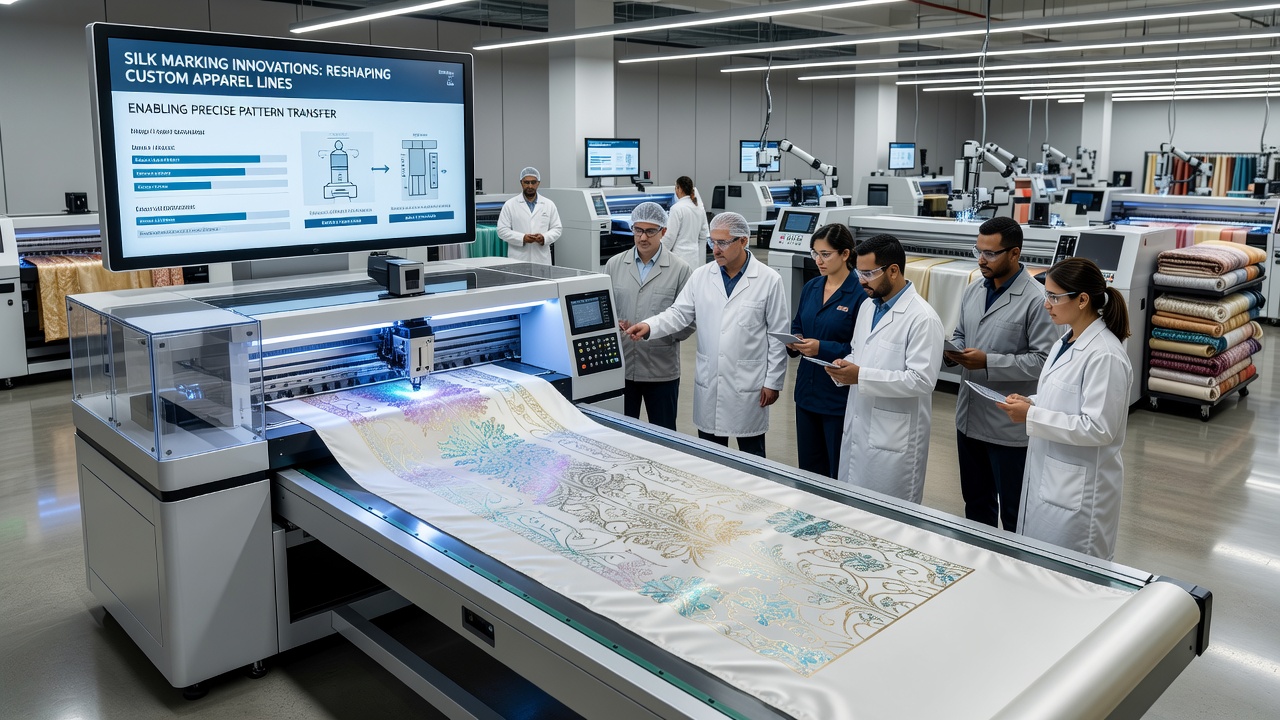
Production lines integrate these markers through automated rollers and precision nozzles that apply designs at speeds matching high-volume output, and the equipment adjusts pressure adn temperature in real time to match fabric thickness variations common in blended silk apparel. Facilities that upgraded equipment in 2025 noted throughput increases of 22 percent because fewer garments required rework after initial washing tests.
Material Compatibility and Durability Testing
Silk fibers present unique challenges during marking because their protein structure reacts differently to heat and moisture than synthetic alternatives, yet recent formulations use pH-balanced carriers that prevent fiber swelling during application and subsequent laundering. Independent laboratories documented that treated samples maintained tensile strength within 3 percent of untreated controls after exposure to alkaline detergents typical in commercial cleaning environments.
One textile research group released findings in September 2026 indicating that multi-layer transfer films reduced bleeding incidents to near zero when patterns featured fine lines under 0.5 millimeters wide, and these results came from side-by-side comparisons against conventional screen-print methods that showed visible dye migration within the first 20 cycles.
Integration Into Existing Production Lines
Apparel plants retrofit older conveyor systems with modular marking stations that slot between cutting and assembly stages, and operators calibrate the units using digital templates downloaded from design software to ensure alignment accuracy within 0.2 millimeters across garment panels. This setup allows quick switches between custom orders without halting the line for extended cleanups or recalibrations.
Data from plants in multiple regions reveal that downtime related to marking errors dropped by 35 percent after implementation, while inventory tracking systems now log each marked batch for traceability through the full supply chain. Government textile standards from the European Union emphasize consistent performance metrics that these innovations satisfy without additional chemical treatments.
Industry Adoption Patterns and Supporting Research
Companies specializing in high-end custom apparel adopted the technology first because client demands for wash-fast personalization justified the initial equipment costs, and mid-tier manufacturers followed once suppliers scaled production of compatible inks and films. A report issued by the Commonwealth Scientific and Industrial Research Organisation in Australia tracked adoption across 47 facilities and found average cost recovery within 14 months when lines ran above 70 percent capacity.
Additional studies conducted at North American universities confirmed that the new markers perform equally well on charmeuse and crepe silk varieties, and researchers noted minimal impact on fabric drape or hand feel after the transfer process completes. Plants report that training for line workers takes under two days because the interface mirrors existing digital controls already familiar to operators.
Future Developments Expected After 2026
Equipment developers continue to refine sensor arrays that detect fiber moisture content before marking begins, and this adjustment prevents over-saturation that could otherwise lead to edge blurring during later washing stages. Projections from industry associations suggest further efficiency gains as ink formulations incorporate bio-based pigments that maintain color stability under extended UV exposure common in retail display settings.
Regulatory bodies in Canada have begun updating textile labeling guidelines to reflect the enhanced durability data now available, and compliance documentation for these marked products requires fewer supplemental tests than earlier methods demanded. Facilities planning expansions in late 2026 cite these markers as a core component of their automation roadmaps.
Conclusion
Silk marking innovations continue to alter how custom apparel reaches production scale, and the combination of precise application tools with wash-resistant formulations delivers consistent results across varied fabric types and order volumes. Facilities that incorporate these systems report measurable improvements in output quality and process reliability while meeting durability expectations set by commercial laundries and end users alike.